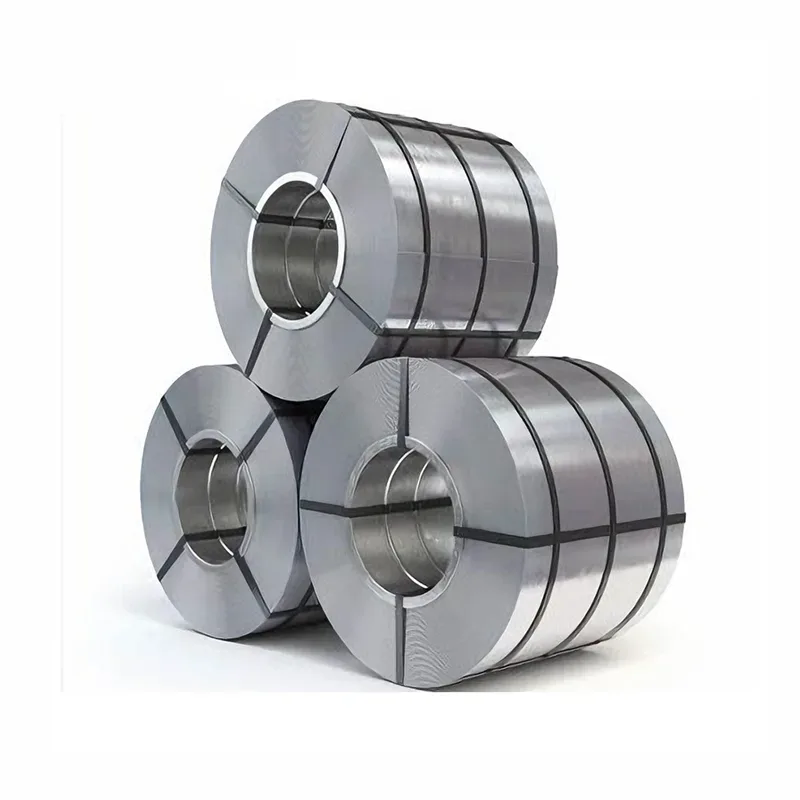
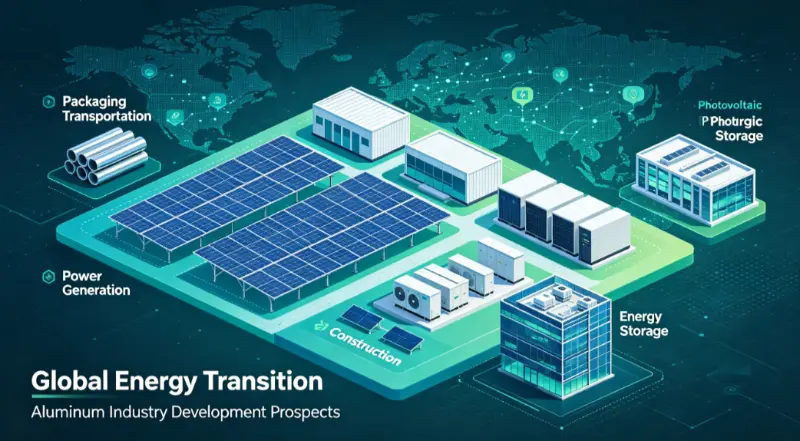
Global energy transition and urbanization in developing countries are the two core drivers of growing aluminum demand. Thanks to its lightweight properties, electrical conductivity and recyclability, aluminum continues to play a vital role in key sectors including packaging, transportation, power generation and construction.
Climate change is increasingly disrupting the global environmental system, human health and economic stability, causing severe casualties and economic losses. This underscores the urgency of global climate action.
The rapid expansion of installed capacity in photovoltaic (PV) and energy storage systems (ESS) has driven a notable increase in aluminum consumption per gigawatt (GW) of installed capacity.
According to SMM analysis, the fast-growing new installed capacity in the global photovoltaic and energy storage sectors has directly translated into higher aluminum demand. Looking ahead, energy storage installed capacity will maintain robust growth over the next five years. Global photovoltaic installations are projected to grow at a compound annual growth rate (CAGR) of 9.3% by 2030, compared with an average annual growth rate of 29% over the previous decade.
With its unique advantages including high strength-to-weight ratio, corrosion resistance and thermal conductivity, aluminum will continue to increase its material share in green power infrastructure, further consolidating the foundation for sustained growth in primary aluminum consumption.






![Inevitable Trends and Opportunities for the Aluminum Industry Amid the Wave of New Quality Productive Forces [SMM Aluminum Industry Conference]](/upload/8673/20260421143333421382.webp "Inevitable Trends and Opportunities for the Aluminum Industry Amid the Wave of New Quality Productive Forces [SMM Aluminum Industry Conference]")